



























Tan Su Shan: World’s 6th Most Powerful Businesswoman Leading Southeast Asia’s Largest Bank Into the AI Era
[SINGAPORE] In the 58-year history of DBS Group, Tan Su Shan has achieved two historic firsts: she is the bank’s first female CEO, and the first leader to propel Southeast Asia’s largest lender deep into the era of autonomous artificial intelligence. On Fortune’s 2026 ‘Most Powerful Women in Business’ list, she ranks 6th globally and 1st in Asia.
Under her command, DBS has deployed over 2,000 active AI models, while employees have built 26,000 personal AI agents. In 2025 alone, these AI initiatives generated an estimated S$1 billion in economic value. More importantly, she is actively preparing the bank for the industry’s next seismic shift: ‘agent-to-agent’ banking.
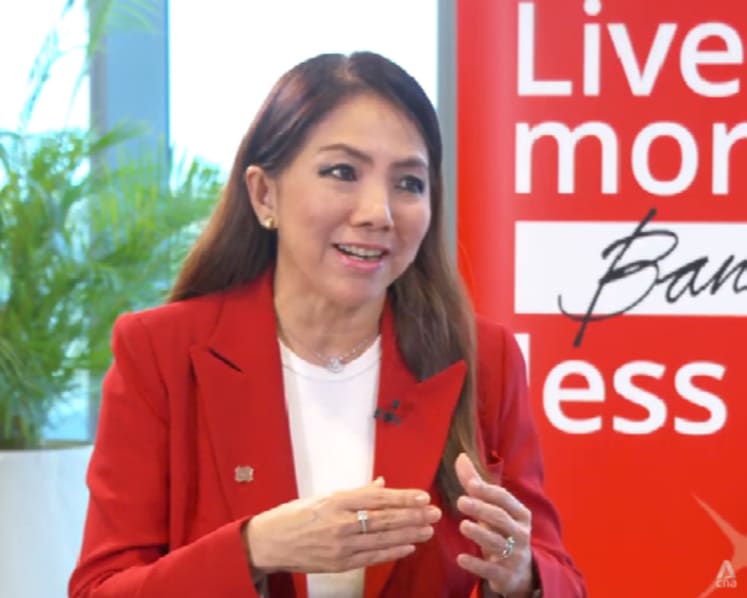
From Oxford Philosophy to the Pinnacle of Banking
Born and raised in Singapore, Tan interned at DBS while studying philosophy, politics, and economics at the University of Oxford. After graduating in 1989, she built her career across global financial institutions, including Barings Securities, where she covered institutional equity and derivative sales in London, Tokyo, and Hong Kong until the bank’s collapse in 1995.
She subsequently pivoted to private banking with two stints at Morgan Stanley and a role at Citi Private Bank, deeply honing her wealth management expertise. In 2010, former DBS CEO Piyush Gupta brought her back to the bank as Group Head of Wealth Management.
“I wanted to get somebody who had the capacity to work collaboratively, and in private banking, it’s not easy, because it’s an industry made up of a lot of prima donnas.”
— Piyush Gupta, Former DBS CEO
Over the next decade, Tan led DBS’s wealth management, consumer banking, and institutional banking divisions—units that generated roughly 90% of the bank’s revenue before she took the helm. Appointed CEO in 2024 and officially taking office in March 2025, she made history as the first woman to lead the banking giant.
DBS’s AI Strategy: Beyond Chatbots to Agentic AI
Under Tan’s leadership, DBS’s AI ambitions have moved far beyond conventional chatbots. The bank is aggressively embedding generative and agentic AI—software capable of independent reasoning, planning, and executing tasks using digital tools—across nearly every operational facet.
Employees use an internal generative AI platform to access policy documents, conduct research, and build personal AI agents. By the end of 2025, staff had created approximately 26,000 personal agents.
DBS operates over 2,000 AI models across the organization, streamlining workflows in legal, compliance, institutional banking, marketing, and wealth management.
11 major cross-departmental AI projects are now embedded. For instance, an AI-powered workflow for writing credit memos has drastically reduced the time corporate bankers spend on administrative drafting.
A dedicated team has been established to ensure the resilience and security of AI technologies, a critical prerequisite for scaling agentic workflows safely.

The “Token Paradox”: The More You Use, The Cheaper It Gets
In a recent interview with Bloomberg Television, Tan introduced a concept she calls the “token paradox”: DBS is consuming far more AI tokens than ever before, yet the cost per token is steadily declining.
“The more you use, the cheaper it gets. Our people are getting a lot smarter on how to optimise.”
— Tan Su Shan, Group CEO, DBS
She explains that this efficiency stems from three core optimizations:
- Memory Caches: Preventing identical queries from being reprocessed.
- Multi-Provider Strategy: Working with multiple AI vendors to route tasks to the most cost-effective models.
- Smart Routing: Sending simple queries to smaller language models rather than burning compute on massive ones.
“You don’t need to burn an ocean to get a straightforward answer.”
— Tan Su Shan
Remarkably, DBS’s total technology spending remains stable at roughly 10% of revenue, proving that AI ROI is being realized without inflating the IT budget.
Financial Performance: AI Fuelling Fee Income Growth
In Q2 2026, DBS reported a record net profit and raised its full-year guidance. Tan noted that AI is now tangibly contributing to fee income growth, particularly in wealth management and corporate banking.
Q2 2026 net profit accelerated 9% YoY to S$3.1 billion, with total income climbing 6% to S$6.1 billion, surpassing analyst expectations.
“We’re beginning to see the green shoots of AI working in generating ideation that generates fees,” Tan told CNA, noting AI creates a “higher velocity of transactions”.
AI is shortening customer onboarding and KYC checks, generating timely investment ideas, and accelerating transaction processing for high-net-worth clients.
Young, AI-enabled relationship managers can now confidently pitch complex M&A and strategic ideas directly to client CEOs and CFOs.
The Future Vision: Agent-to-Agent Banking
Tan believes the next major disruption in finance will be AI agent-to-agent banking—where autonomous AI agents representing clients interact directly with the bank’s AI agents to execute transactions.
“It’s frontier stuff. In an agentic world, you won’t need banking applications anymore, it’s a complete leapfrog. You will create agents that can do payments, wealth transactions, foreign exchange, and loans.”
— Tan Su Shan
DBS is already testing this space. In February 2026, it partnered with Visa to allow AI agents to make payments on behalf of consumers using tokenized credit card details. Tan insists the bank must prepare for all scenarios, whether this shift happens in two, five, or ten years.
Leadership Philosophy: AI Augments, Humans Connect
Despite her aggressive tech push, Tan firmly believes technology should augment, not replace, human relationships. She has repeatedly pushed back against the narrative that AI’s primary purpose is to cut headcount.
“Other people might say it’s easier, just fire everyone and then hire again, but if you do that, then where is the humanistic appreciation of people who’ve been with you 30 years, 40 years, 20 years?”
— Tan Su Shan
She insists that the ‘personal touch’ remains the bedrock of banking.
“You can use AI to answer questions, but you need humans to do what humans do best, which is to create long-term human-to-human relationships. At the end of the day, that’s what being human is all about.”
— Tan Su Shan
Frequently Asked Questions
Who is Tan Su Shan and why is she significant?
What is DBS’s AI strategy under her leadership?
What is the “Token Paradox” she mentioned?
How is AI impacting DBS’s financial performance?
Does she believe AI will replace bank employees?
Do you agree with Tan Su Shan’s philosophy that AI should augment human relationships rather than replace bank staff? How will ‘agent-to-agent’ banking change the way we manage our finances? Share your thoughts in the comments below.
※ This feature compiles insights from Bloomberg, Forbes, Channel News Asia, The Edge, and VnExpress. All financial figures are based on official DBS disclosures and verified financial media reports.








idcaricuan
September 7, 2026 at 6:18 am
Really impressed with the bonus offers for new members. It gave me a great head start. I’m really enjoying my experience with idcaricuan so far.